
Screen-Free Morning Routines
Why calmer mornings often begin before the first screen turns on
Mornings can often feel rushed and stressful — especially when screens enter the day too early.
Checking phones at breakfast.
Cartoons before getting dressed.
Scrolling before school.
Gaming before brains are fully awake.
While screens may seem helpful during the morning rush, fast-paced digital stimulation can leave children feeling distracted, emotional, and overwhelmed before the day has properly begun.
The good news?
Even 10–15 minutes of screen-free connection can help children feel calmer, more focused, and better prepared for the day ahead.
📰 Study Spotlight: Tech-Free Mornings & Emotional Regulation
Studies suggest that children who start the day without screens are often calmer, more focused, and better able to manage emotions during morning routines.
Fast-paced digital stimulation first thing in the morning can increase stress, reduce attention span, and make transitions harder.
Takeaway:
Connection, movement, and routine help children feel more grounded before technology enters the day.
🌿 Morning Reset Ritual
You don’t need a complicated morning routine.
Small moments of calm and connection can make a big difference.
Before screens, try:
10–15 minutes of connection
Breakfast together
Natural light or fresh air
Stretching, movement, or calming music
Instead of:
Wake up → Screen → Rush → Stress
Try:
Wake up → Connect → Move → Breakfast → Screens later
Try this phrase:
“Let’s start the day together before screens.”
Calm mornings often create calmer days.

👶 Babies (0–12 months)
Start the day with smiles, cuddles, songs, and face-to-face interaction to build connection and emotional security.
🌱 Little Ones (1–6 years)
Use playful routines like morning songs, picture charts, stretches, or helping with breakfast to reduce power struggles.
🌿 Growing Kids (7–11 years)
Encourage independence with simple checklists, breakfast together, and one morning task they can lead themselves.
🌴 Tweens & Teens (12–18 years)
Encourage a tech-free first 15–20 minutes, breakfast before phones, and charging devices outside the bedroom overnight.
Keep Devices Out of Bedrooms Overnight
Keeping devices charging outside bedrooms can improve sleep, reduce stress, and support calmer mornings.
Why it matters:
Children and teens are more likely to:
Check notifications during the night
Scroll first thing in the morning
Lose sleep quality
Start the day overstimulated
Tip:
Try a “Phones Sleep Too” family rule where all devices charge overnight in one shared space.

This Week’s Term: PHANTOM VIBRATION SYNDROME

Definition:
Feeling your phone vibrate or buzz — even when it hasn’t.
Why it matters:
Constant notifications and phone-checking can keep children and teens on high alert, increasing anxiety, interrupting sleep, and creating compulsive phone habits.
Tip:
Encourage regular phone-free breaks, especially before bed and during family time.
You can also:
Turn off non-essential notifications
Use “Do Not Disturb”
Keep phones away during meals
Sometimes silence is exactly what the brain needs.
Morning Routine Guide
Create calmer, more connected mornings with simple, predictable routines that reduce rushing, stress, and screen-time battles.
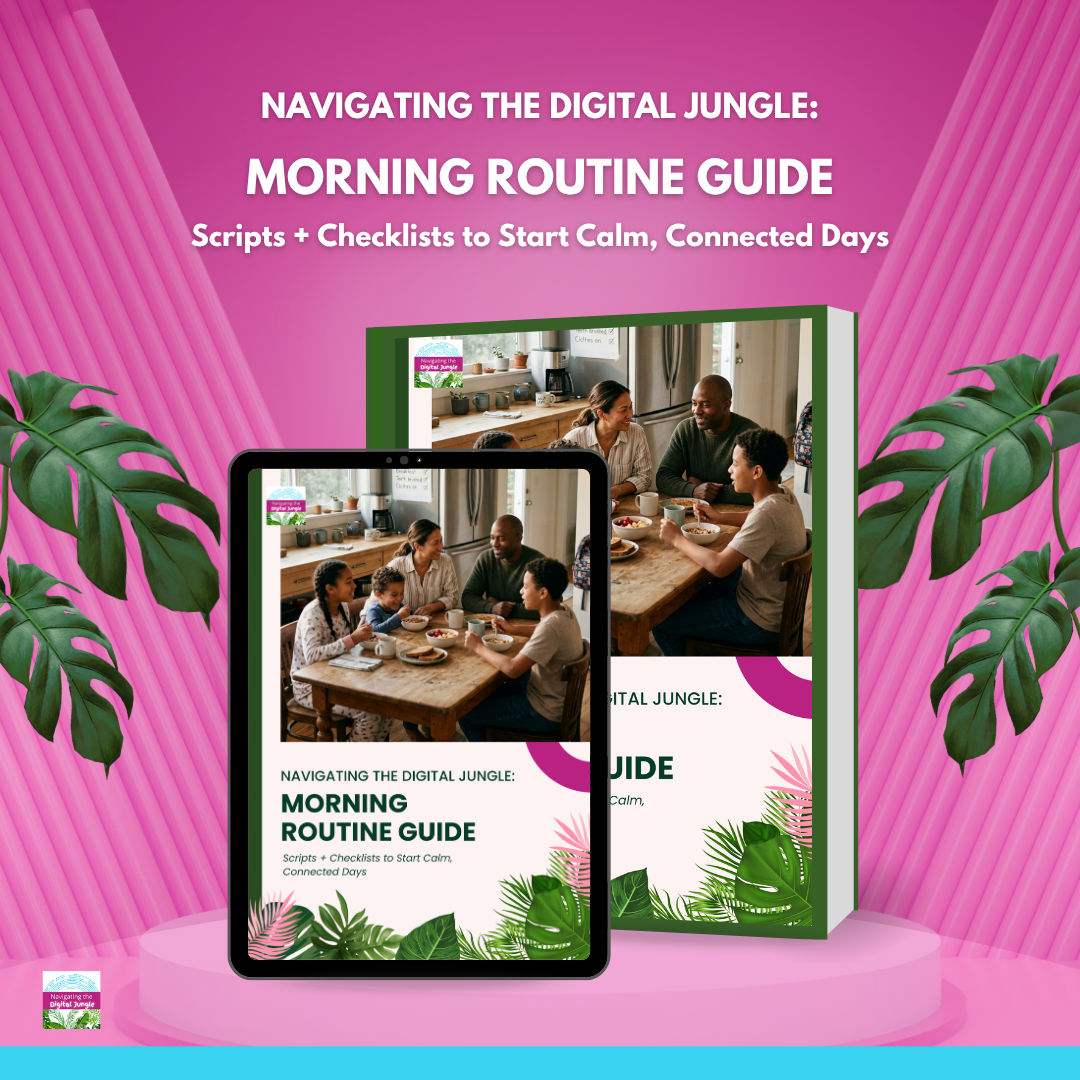
Inside you’ll find:
Morning routine checklists
Screen-free morning ideas
Calming “Digital Jungle” scripts
Connection-based activities
Age-appropriate routines from toddlers to teens
Designed to help families start the day with more calm, cooperation, and ease.
✨ Also Available: Evening Routine Guide
Create calmer bedtimes and better sleep with simple, predictable wind-down routines, screen-smart evening scripts, and easy checklists to end the day peacefully.
👉 Get the Evening Routine Guide
✨ Save with the Calm Days Bundle
Get both the Morning Routine Guide and Evening Routine Guide together for calmer starts, smoother bedtimes, and healthier family routines.
☀️ Family Wake-Up Reset

Before breakfast or devices, try a simple 5-minute family reset together — stretching, a quick dance, some morning music, deep breaths, fresh air outside, or a short walk.
For older children and teens, encourage breakfast before phones, getting natural light before screens, listening to music instead of scrolling, or writing a short daily goal before picking up devices.
How the day starts often shapes how the day feels.
Supporting Healthier Digital Habits Starts at Home
Many parents are noticing increased stress, anxiety, sleep disruption, and emotional dysregulation linked to early-morning screen habits.
Topics include screen-time balance, digital wellbeing, smartphone readiness, sleep and devices, gaming and social media, and building healthier family tech habits.

You’re warmly invited to explore Sue’s free introductory session:
“The Top 5 Digital Challenges for Parents – And How to Solve Them.”
Sessions are warm, practical, non-judgemental, and designed to support real family life.
Small screen-free moments in the morning can create calmer, more connected days.
Stay connected, stay balanced!