
Social Media & Mental Health
Understanding the emotional side of the digital world
Screens often fuel family stress, and social media is a big part of children’s and teens’ lives. Friendships, trends, and identity all happen online — but so do pressures like comparison, endless scrolling, and constant notifications, which can affect mood, confidence, and sleep.
The challenge isn’t just screen time — it’s understanding how social media makes children feel. Small, calm conversations can make a big difference.
In this edition of the Digital Jungle, we explore how social media impacts wellbeing and how parents can support healthier digital habits.
Let’s decode the online world together.
Social Media & Teen Mental Health
Research shows that heavy social media use can affect teenagers’ emotional wellbeing. Teens spending three or more hours a day online are more likely to experience anxiety, loneliness, lower mood, and increased comparison with others.
Psychologist Jonathan Haidt highlights the “comparison spiral” caused by constant exposure to curated online lives. Teens may feel everyone else is happier, more successful, or more popular.
Social media isn’t the enemy. The focus should be on helping teens build awareness, balance, and emotional resilience online.
What matters most is helping children build awareness, balance, and emotional resilience when navigating these spaces.
The 3-Conversation Rule
Instead of launching straight into lectures about screen time, try opening gentle conversations that encourage reflection.
Three simple questions can open the door to meaningful discussion:
“Which apps make you feel good and which ones leave you feeling drained?”
This helps children begin recognising how different online spaces affect their emotions.“Let’s try one small change this week.”
This might be unfollowing accounts that create pressure, muting notifications in the evening, or limiting scrolling before bed.“I’m always here if you need help navigating something online.”
Knowing they can come to you without judgement builds trust and safety.
Children don’t need perfect rules.
They need supportive adults who help them think critically about their digital lives.

Simple, Age-Appropriate Ideas To Support Screen Balance From Babies To The Teen Years.
👶 Babies (0–12 months)
Even without active screen time, background videos can reduce face-to-face interaction. Talk, sing, and play — your voice is their most important stimulation.
🌱 Little Ones (1–6 years)
Introduce kindness online in simple ways. Phrases like “We use kind messages online” build early digital values.
🌿 Growing Kids (7–11 years)
Curiosity about social media begins. Encourage children to pause before posting and ask:
“Would you feel happy if someone said that to you?”
“Would a teacher or grandparent see this?”
These reflections build digital self-awareness.
🌴 Tweens & Teens (12–18 years)
Co-create social media boundaries rather than impose rules, e.g.:
No phones during meals
Devices charging outside bedrooms overnight
Screen-free time before sleep
When teens are included in decisions, they’re more likely to follow them.
Spotting Digital Red Flags
Alongside emotional wellbeing, social media also comes with important safety considerations.
Talk openly with your child about potential online red flags, such as:
Strangers trying to move conversations into private chats
Pressure to share personal information or photos
Requests to keep online conversations secret
Feeling uncomfortable, pressured, or uneasy during interactions
The most powerful safety tool isn’t monitoring apps.
It’s open conversation.
Let your child know they can always talk to you if something online doesn’t feel right.

This Week’s Term: ECHO CHAMBER
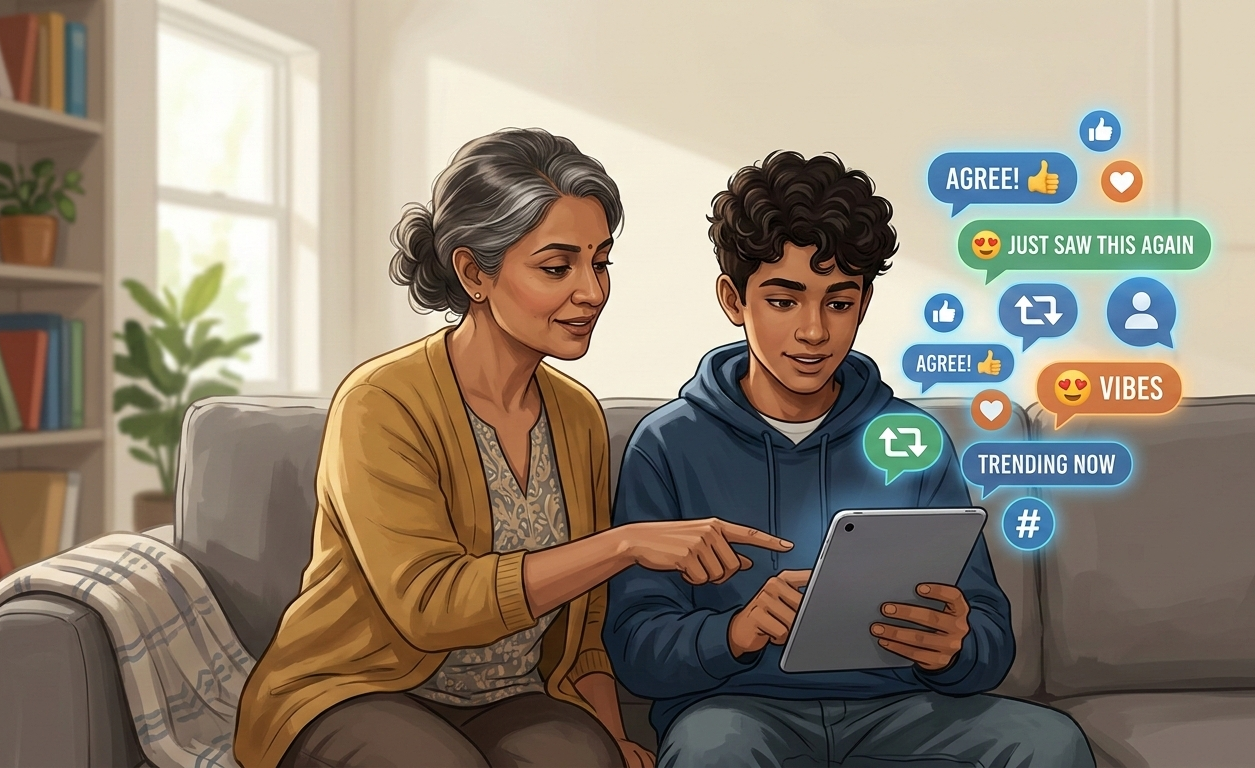
An echo chamber happens when social media algorithms show us mostly the opinions and ideas we already agree with.
Over time, this can create the impression that “everyone thinks the same way.”
For children and teenagers, this can limit exposure to different perspectives and reduce opportunities to develop critical thinking.
Why it matters:
Young people may begin to believe that certain opinions are universal when in reality they’re simply seeing a filtered version of the online world.
Conversation starter:
“Have you ever noticed that your feed shows lots of the same types of posts?”
Encourage children to explore a variety of ideas and viewpoints online and discuss them together. It’s a powerful way to build perspective and digital literacy.
Social Media Safety Guide
Social media can be exciting for children and teens but it can also bring pressure, comparison, and emotional ups and downs.
If you’re unsure when your child is ready, what boundaries to set, or how to start calm conversations, this practical guide will help you navigate it with confidence.
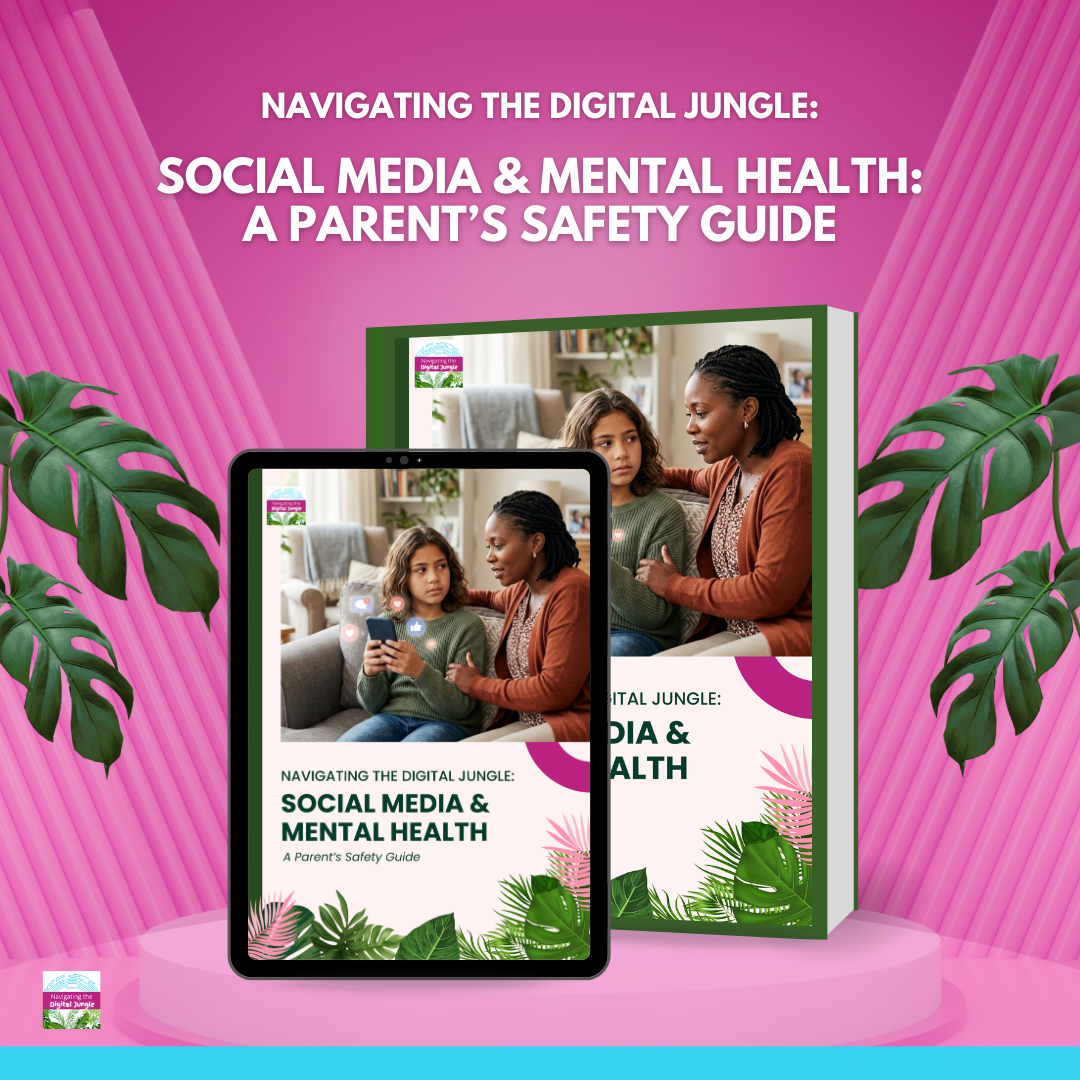
Inside the Social Media Safety Guide, you’ll find:
Clear ages and stages guidance from childhood to the teen years
Simple family boundaries that support mental wellbeing
Signs that social media may be affecting your child
Easy-to-use Digital Jungle conversation scripts
Screen-Free Sunday Morning

Instead of rushing straight into devices, try creating a gentle screen-free start to the day.
Slow mornings allow the nervous system to reset after a busy week of school, screens, and schedules.
Try:
A relaxed family breakfast
A walk outdoors or time in the garden
Board games or simple play
Music, baking, or creative activities together
Even a few screen-free hours can bring a surprising sense of calm and connection.
Supporting Children’s Digital Wellbeing Together
As social media becomes part of everyday life for children and teens, many parents are looking for guidance on how to support their child’s emotional wellbeing online.
Schools play a powerful role in helping families understand the digital world and build healthier habits around screens, sleep, and social media.
Through my Navigating the Digital Jungle parent talks, I help schools start calm, practical conversations with parents about digital wellbeing, online safety, and screen balance.

If your school or parent community would find it helpful, you’re welcome to explore a free 20-minute introductory parent demo, based on my full Power Hour session:
“The Top 5 Digital Challenges for Parents – And How to Solve Them.”
Healthy digital habits start with calm conversations.
And those conversations begin at home.
You’re doing better than you think.